Guide
Baby-Led Weaning vs Purées: Which Is Better? (2026)
By Dr. James Holloway, Ergonomics Consultant · Updated 2026-03-20
Choosing between baby-led weaning and purées is one of the biggest decisions parents face when starting solids. Both methods can be safe, nutritious, and enjoyable — and research suggests you don't have to pick just one. Here's what the evidence says so you can choose with confidence.
By Rachel Nguyen, BHSc Nutrition | Last updated: March 2026
Medical disclaimer: This article is for informational purposes only and does not replace individualised advice from your paediatrician, GP, or accredited dietitian. Always consult a qualified health professional before starting solids or making changes to your baby's diet.
| Option | Best For | Price Range | Rating |
|---|---|---|---|
| Baby-Led Weaning (BLW) | Families wanting baby to join mealtimes & develop motor skills early | Low (family food) | ⭐⭐⭐⭐½ |
| Purée Feeding | Families wanting controlled nutrient intake & lower mess | Low–Moderate | ⭐⭐⭐⭐½ |
| Combined Approach | Flexibility, best of both methods | Low–Moderate | ⭐⭐⭐⭐⭐ |
| Modified BLISS Method | BLW with emphasis on iron-rich & high-energy foods | Low (family food) | ⭐⭐⭐⭐⭐ |
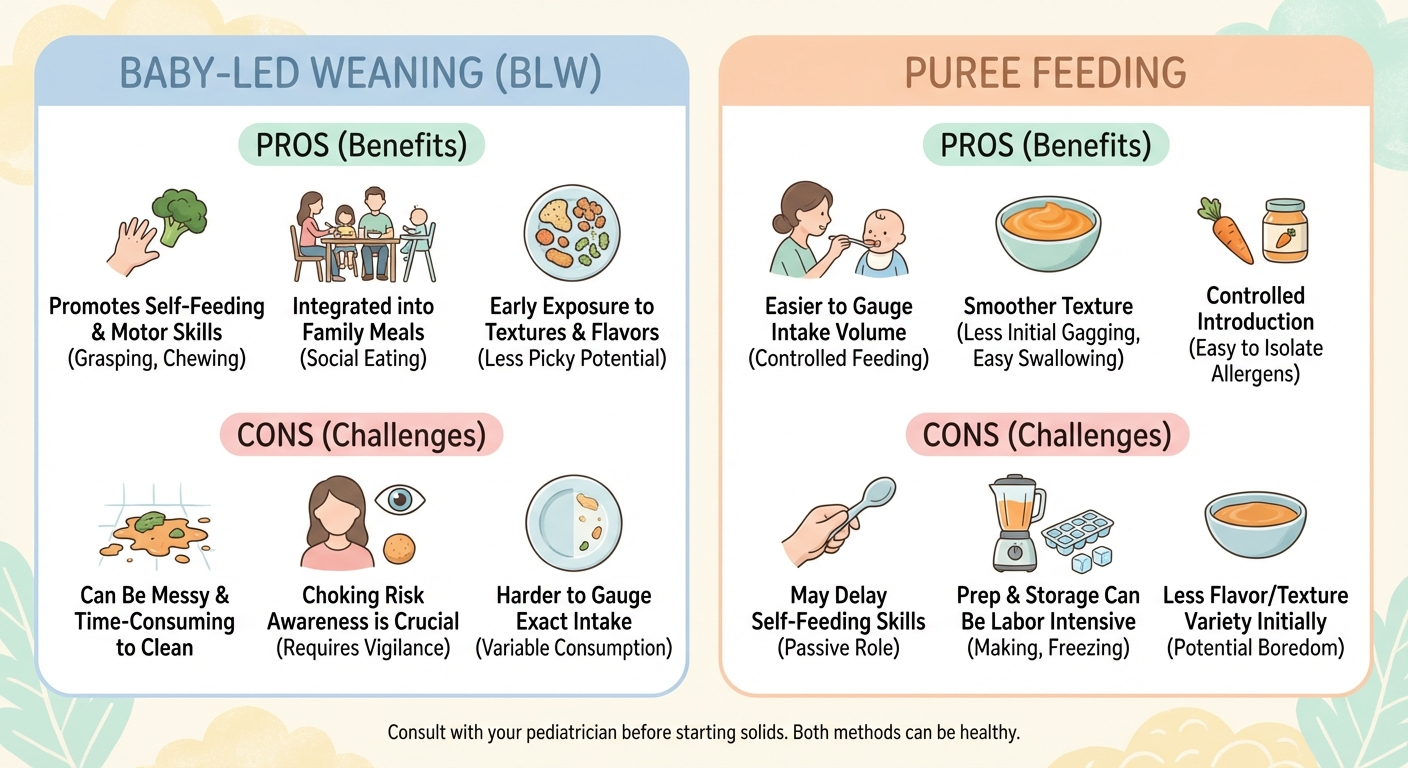
Visual guide: Baby-led weaning vs purée feeding methods compared side by side
Table of Contents
- What Is Baby-Led Weaning?
- What Is Purée Feeding?
- Baby-Led Weaning vs Purées: Side-by-Side Comparison
- Benefits of Baby-Led Weaning
- Benefits of Purée Feeding
- Potential Risks and Drawbacks
- Can You Combine Both Methods?
- Best First Foods for Each Approach
- Safety Tips for Starting Solids
- What the Research Actually Says
- How to Decide: Practical Questions to Ask
- FAQs
- Sources and Methodology
What Is Baby-Led Weaning?
Baby-led weaning (BLW) skips the purée stage entirely. Instead of spoon-feeding smooth foods, you offer your baby soft, appropriately sized finger foods from around 6 months of age. Your baby picks up the food, brings it to their mouth, and feeds themselves.
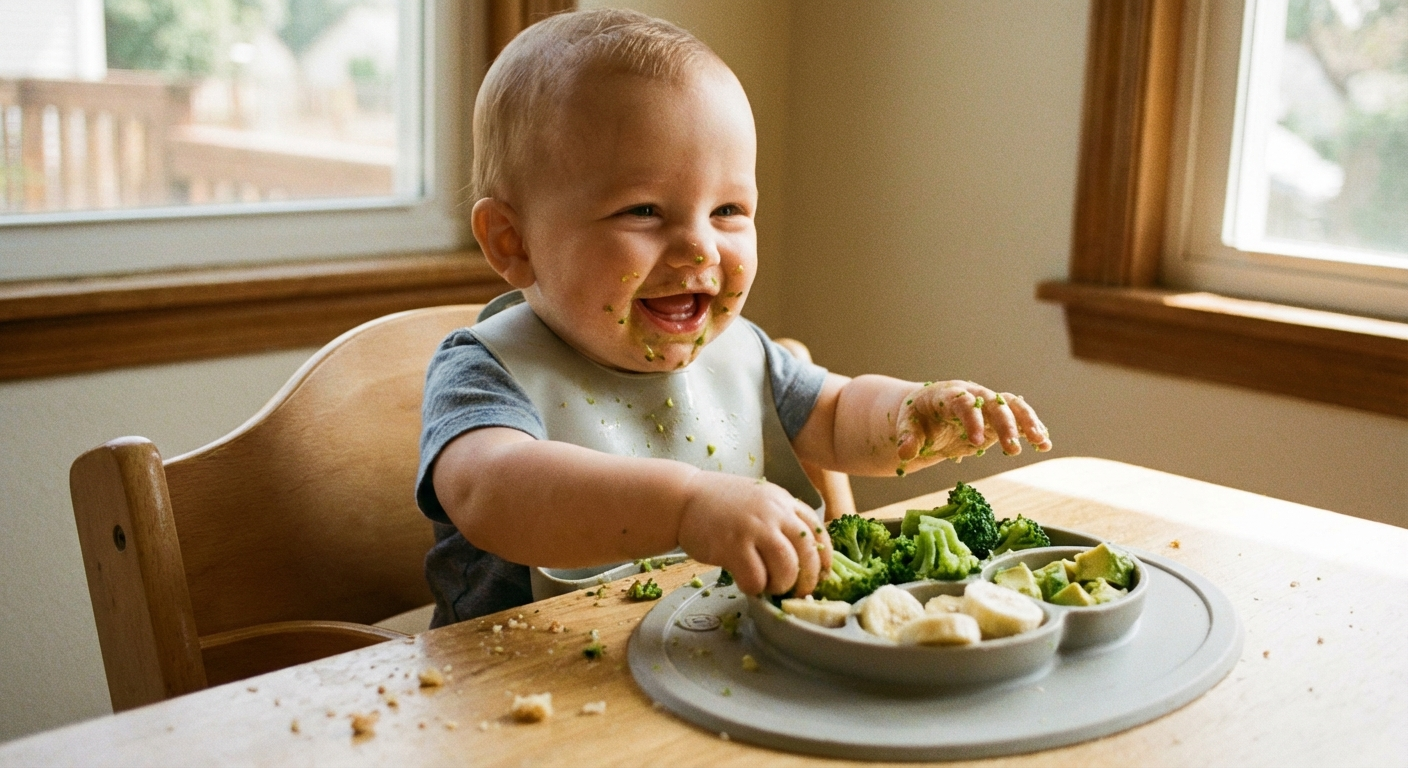
The term was popularised by UK health visitor Gill Rapley in the early 2000s, though self-feeding is hardly a modern invention — parents across cultures have been handing babies food from the family table for centuries.
Key principles of baby-led weaning include:
- Baby controls the pace. They decide what goes in their mouth, how much, and how fast.
- Food is offered in graspable shapes. Think finger-length strips, wedges, and florets rather than cubes or coins.
- Family meals are shared. Baby eats a modified version of what everyone else is eating.
- Milk remains the primary nutrition source until around 12 months — food is for exploration and learning at this stage.
Baby-led weaning isn't simply "giving a baby food and hoping for the best." It requires understanding which textures and shapes are safe, and it demands close supervision at every meal.
What Is Purée Feeding?
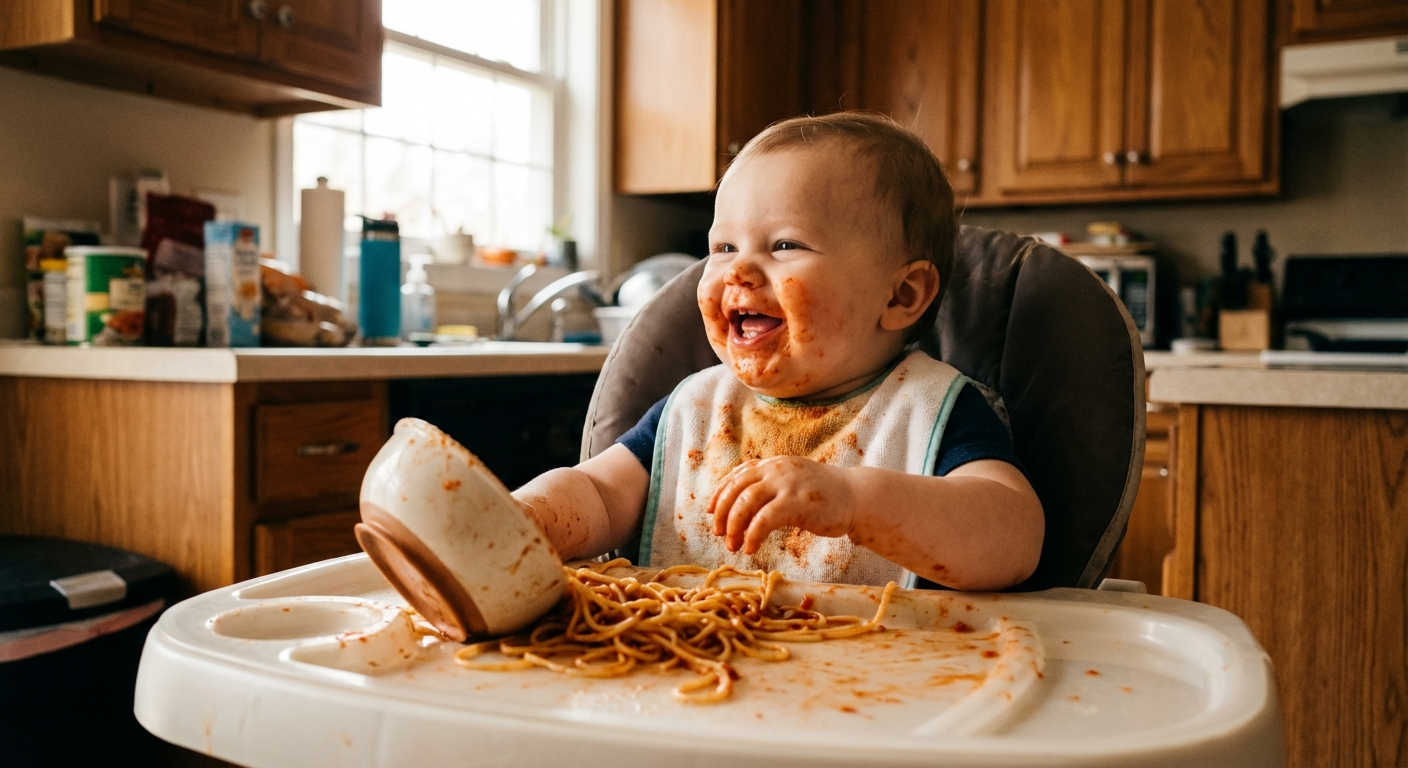
Purée feeding is the traditional spoon-led approach most of our parents used. You start with thin, smooth purées around 6 months (or sometimes from 4 months under medical guidance), then gradually progress through thicker textures, mashed foods, and eventually soft finger foods.
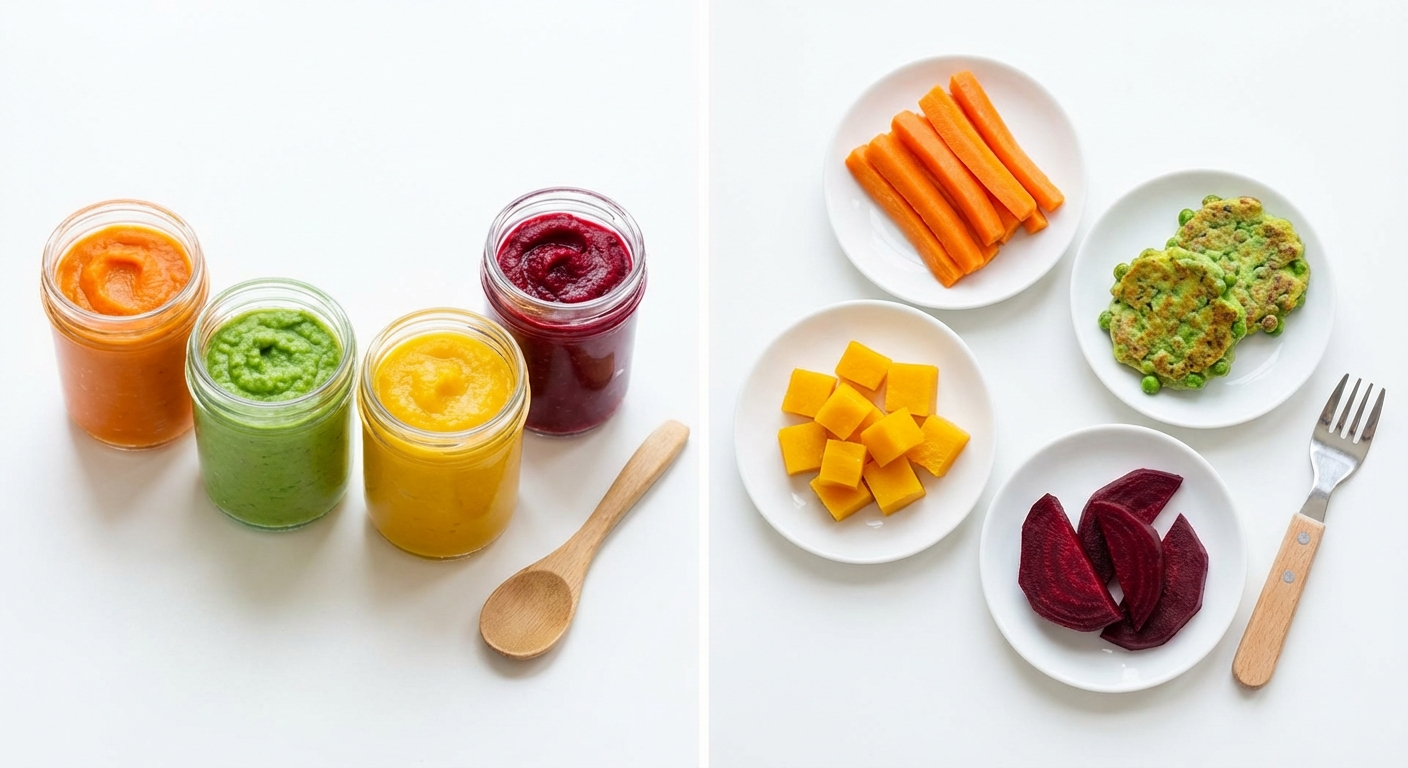
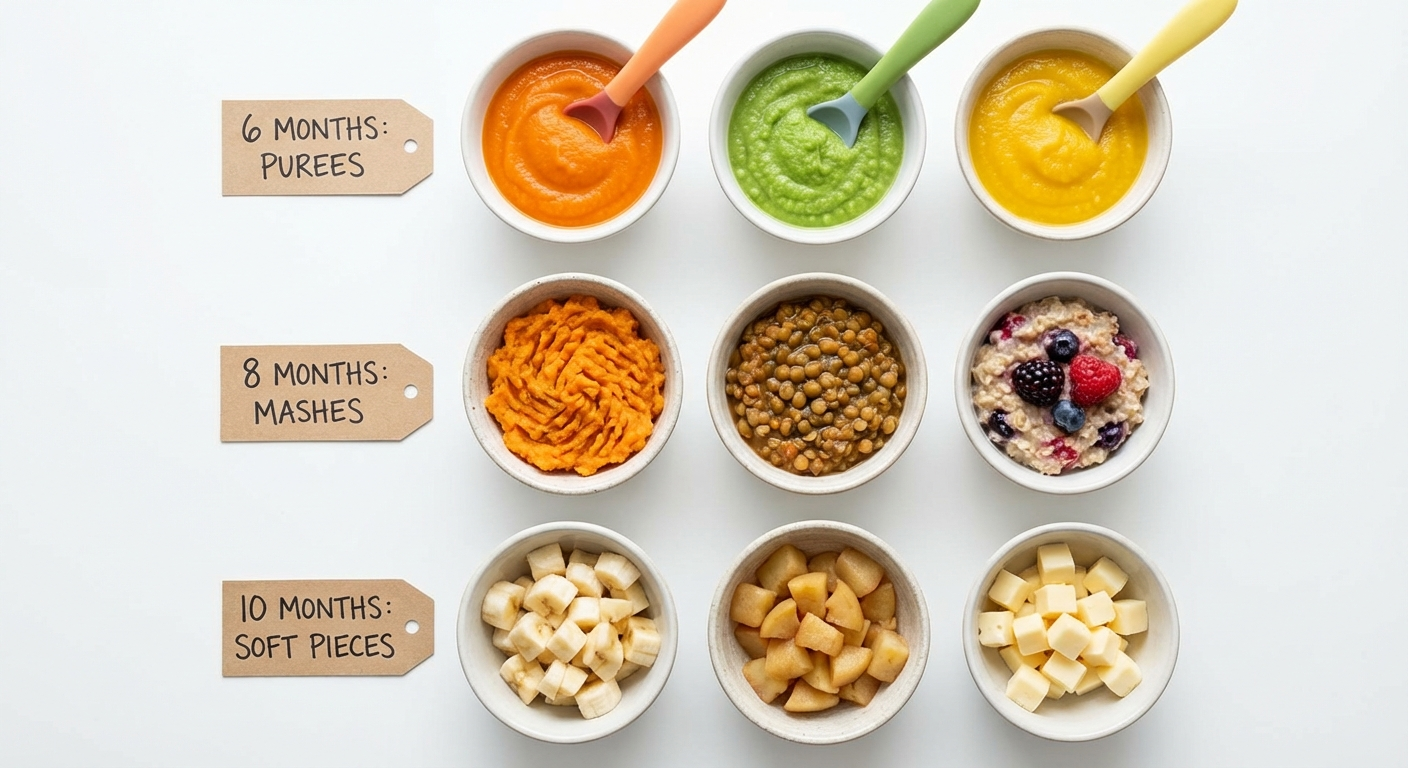
The typical texture progression looks like this:
- Smooth purées (6 months) — single-ingredient, runny consistency
- Thicker purées (6–7 months) — slightly lumpy, combined flavours
- Mashed foods (7–8 months) — fork-mashed with soft lumps
- Soft finger foods (8–9 months) — small pieces baby can self-feed
- Modified family foods (10–12 months) — chopped versions of family meals
Purée feeding gives parents more control over how much food baby takes in, and it can feel less stressful for families who worry about gagging or choking.
Baby-Led Weaning vs Purées: Side-by-Side Comparison
🍌 Baby-Led Weaning
Starting age: Around 6 months
Who controls feeding: Baby self-feeds entirely
Typical first foods: Soft finger foods — avocado strips, steamed vegetables, banana
Texture progression: Starts with soft whole foods, no separate stages
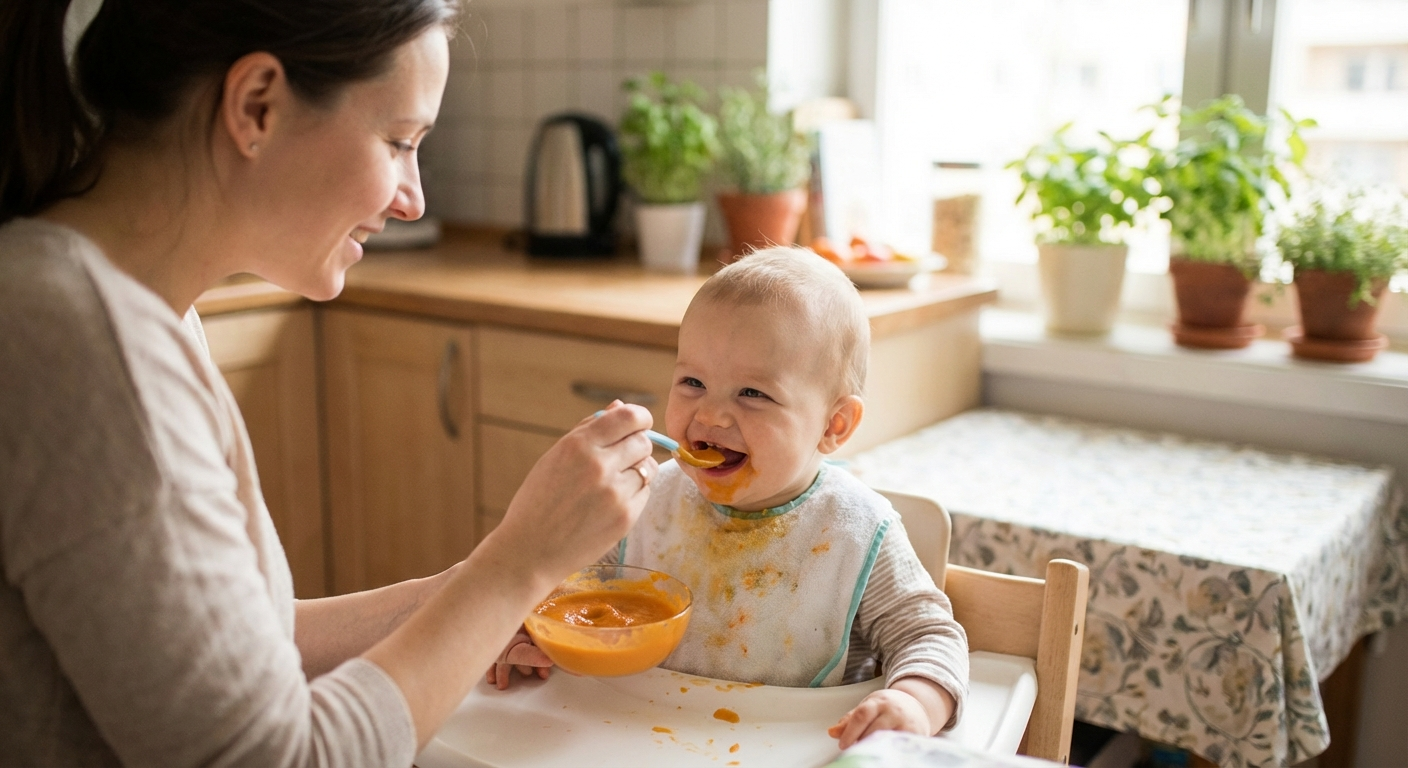
Mess level: High — food goes everywhere
Prep time: Low to moderate — often shared family foods
Motor skill development: Encourages fine motor skills early
Choking risk: Similar to purées when guidelines followed (BLISS study)
Best for: Families wanting baby to join mealtimes, confident with gagging vs choking distinction
🥣 Purée Feeding
Starting age: Around 6 months (sometimes 4 months with medical guidance)
Who controls feeding: Parent spoon-feeds baby
Typical first foods: Smooth purées — sweet potato, pear, rice cereal
Texture progression: Gradual — smooth → lumpy → mashed → finger foods
Mess level: Moderate — contained to face and bib area
Prep time: Moderate to high — batch cooking and freezing common
Motor skill development: Oral motor skills first, fine motor comes later
Choking risk: Low when textures are age-appropriate
Best for: Families wanting more control, babies needing calorie-dense intake, childcare settings
Benefits of Baby-Led Weaning
Research and clinical experience point to several genuine advantages of baby-led weaning:
Self-Regulation of Appetite
Because babies control exactly how much they eat, BLW may support healthier appetite self-regulation. A 2017 study published in JAMA Pediatrics found that babies who self-fed showed greater satiety responsiveness — they were better at stopping when full.
Motor Skill Development
Picking up, grasping, and bringing food to the mouth practises fine motor skills and hand-eye coordination from the very start of the solids journey. These are skills that spoon-fed babies develop later when finger foods are eventually introduced.
Exposure to Variety
Baby-led weaning exposes babies to a range of textures, tastes, and appearances from day one. Some research suggests this early variety may reduce fussiness later, though findings are mixed.
Simpler Meal Prep
No blending, no ice-cube trays, no separate baby meals. With BLW, you modify the family meal to make it baby-safe — remove salt before seasoning, cut food into appropriate shapes, and offer it alongside everyone else's dinner.
Encourages Family Mealtimes
Because baby eats what you eat, there's a natural incentive to sit down together. Shared mealtimes are associated with healthier eating patterns throughout childhood.
Benefits of Purée Feeding
Purée feeding has stood the test of time for good reasons:
Controlled Nutrient Intake
With purée feeding, parents can measure how much food baby actually swallows. This matters for babies who need to gain weight or who have specific nutritional requirements — particularly iron. You know the food went in, not on the floor.
Easier Introduction of Iron-Rich Foods
Iron is critical from 6 months when infant stores begin to deplete. Puréed meats, iron-fortified cereals, and lentil purées are efficiently consumed in purée form, whereas a baby-led weaning beginner might suck on a strip of meat without ingesting much.
Lower Parental Anxiety
Many parents find purée feeding less stressful. Gagging — which is normal, expected, and a safety mechanism — can look and sound alarming. Purée feeding lets families ease into solids without the heart-stopping moments that sometimes accompany BLW.
Works Well in Childcare Settings
Childcare providers often prefer purées for practical reasons: supervision ratios, mess management, and familiarity with the method. If your baby attends daycare, purée feeding may be the approach staff are most comfortable with.
Suitable for Premature Babies or Developmental Delays
Babies born prematurely or those with oral motor delays may not be developmentally ready for self-feeding at 6 months. Purée feeding allows an earlier, gentler start under professional guidance.
Potential Risks and Drawbacks
Neither method is without downsides. Here's an honest look:
Baby-Led Weaning Risks
- Food waste. A lot of food ends up on the floor, in hair, and smeared across the highchair. Expect to offer more food than baby actually eats.
- Iron intake concerns. Some studies suggest BLW babies may consume less iron than purée-fed babies in the early months. Offering iron-rich foods at every meal helps.
- Not suitable for all babies. Babies with developmental delays, low muscle tone, or specific medical conditions may need a modified approach.
- Gagging can frighten caregivers. While gagging is a normal protective reflex (and different from choking), it can cause significant anxiety. Every caregiver needs to know the difference and be first-aid trained.
Purée Feeding Risks
- Delayed texture acceptance. Staying on smooth purées too long (past 9 months) is associated with increased feeding difficulties and food rejection later.
- Overfeeding potential. Spoon-feeding can override a baby's natural satiety signals if parents push "one more bite."
- Less opportunity for independent eating. Babies who are only spoon-fed miss early self-feeding practice.
- Can be time-intensive. Batch-cooking, blending, portioning, and freezing purées takes effort.
Can You Combine Both Methods?
Yes — and many feeding experts now recommend it.
A combined approach means offering purées alongside finger foods from the start. Your baby gets a loaded spoon of iron-rich lentil purée and a strip of soft avocado at the same meal.
This is sometimes called "baby-led introduction to solids" or simply a responsive feeding approach. The BLISS study from the University of Otago used a modified version of BLW that included iron-rich foods and high-energy foods at every meal — effectively combining the best of both approaches.
Benefits of a combined approach:
- Covers nutritional bases. Purées deliver iron and calories efficiently while finger foods build motor skills and texture acceptance.
- Flexibility for different settings. Finger foods at home, purées at daycare — whatever works.
- Reduces parental pressure. You don't have to commit to a rigid philosophy.
- Matches real life. Most families end up doing a mix anyway, even if they start with one method.
If you're feeling overwhelmed by the "which camp" debate, a combined approach might be the most sensible path. For more guidance on starting solids with confidence, see our guide on when to start baby on solids.
Best First Foods for Each Approach
🥑 Best First Foods for Baby-Led Weaning
- Avocado spears — soft, nutrient-dense, easy to grip
- Steamed broccoli florets — natural "handle" for gripping
- Banana — leave some peel on for grip
- Steamed sweet potato strips — iron and vitamin A
- Strips of slow-cooked meat — excellent iron source
- Soft-cooked egg strips — protein and allergen introduction
- Ripe mango spears — sweet, soft, easy to hold
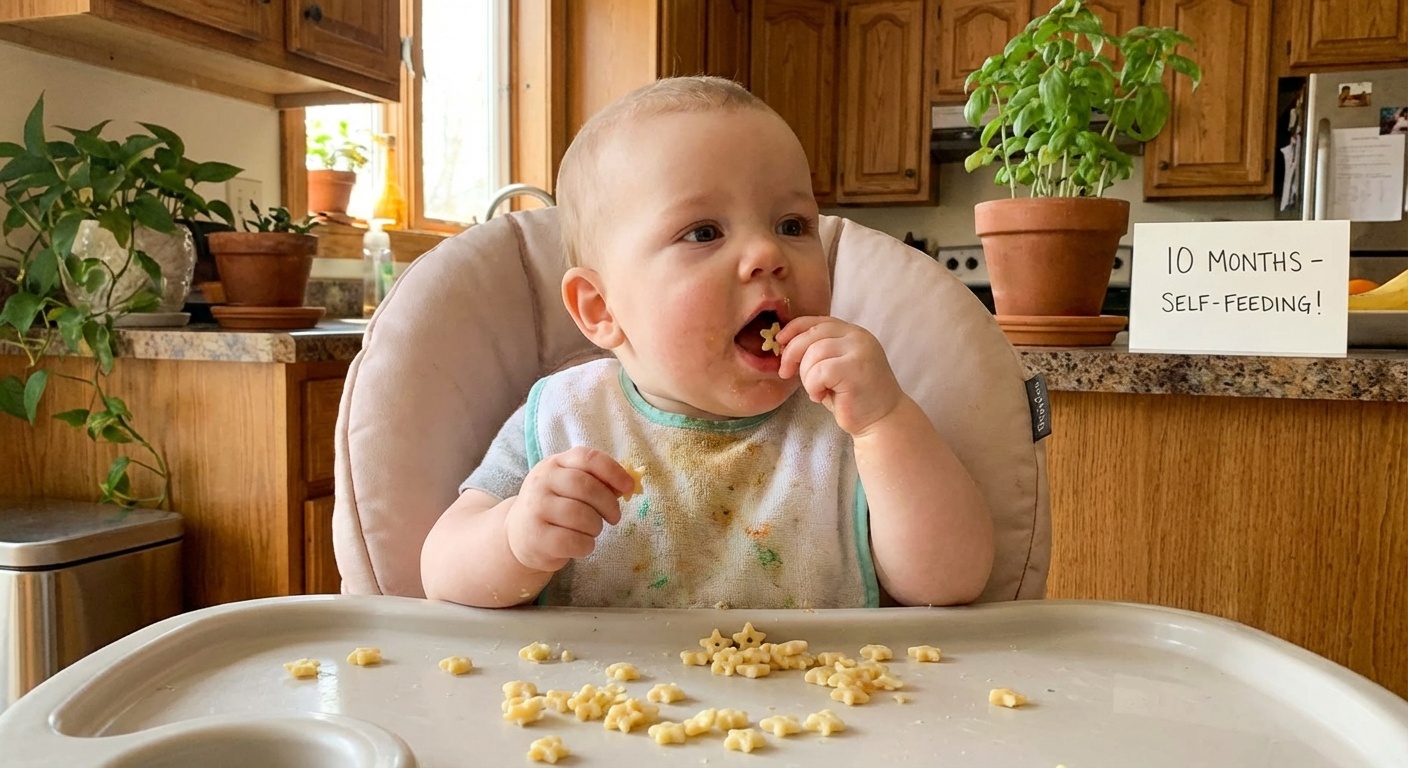
- Well-cooked pasta — fusilli is easy to grip
Rule of thumb: If you can mash it between your thumb and forefinger, it's soft enough.
🥣 Best First Purées
- Sweet potato purée — mild, naturally sweet, high in vitamin A
- Pear purée — gentle on the stomach
- Iron-fortified rice cereal — mixed with breastmilk or formula
- Puréed chicken or beef — iron-rich protein
- Lentil purée — iron and protein for plant-based families
- Pumpkin purée — mild flavour, smooth texture
- Apple purée — cooked and blended, widely accepted
- Zucchini purée — mild vegetable to build acceptance
Pro tip: Introduce vegetables before fruits to build vegetable acceptance early.
For a comprehensive list of age-appropriate options, check out our best first foods for babies guide.
Safety Tips for Starting Solids
Regardless of which method you choose, these safety fundamentals apply:
Always Supervise
Never leave a baby unattended while eating. This applies to both BLW and purée feeding. Sit with your baby at every meal.
Know the Difference Between Gagging and Choking
- Gagging is loud, visible, and your baby will usually resolve it themselves. It's a normal protective reflex. Baby may cough, make retching sounds, and their face may go red.
- Choking is silent or near-silent. Baby cannot cough or cry, may turn blue, and needs immediate intervention.
Every caregiver should complete an infant first aid course before starting solids. This is non-negotiable.
Avoid High-Risk Foods
These foods are choking hazards for babies under 12 months regardless of feeding method:
- Whole nuts and seeds
- Whole grapes (cut lengthways into quarters)
- Raw apple and raw carrot (hard texture)
- Popcorn
- Rice cakes (can form a sticky mass)
- Round sausage coins (cut lengthways)
- Whole cherry tomatoes (halve or quarter)
- Hard lollies and marshmallows
Proper Positioning
Baby should be seated upright at 90 degrees in a supportive highchair with feet resting on a footrest. Never feed a baby reclined or in a car seat.
Allergen Introduction
Current guidelines from the Australasian Society of Clinical Immunology and Allergy (ASCIA) and the American Academy of Pediatrics (AAP) recommend introducing common allergens — including peanut (as smooth peanut butter), egg, cow's milk (in cooking), wheat, soy, tree nuts, fish, and sesame — around 6 months, and not delaying them. This applies equally to BLW and purée feeding.
What the Research Actually Says
Let's cut through the noise. Here's what well-designed studies tell us:
On choking risk: The BLISS randomised controlled trial (Daniels et al., 2018) found no significant difference in choking events between baby-led weaning and traditional spoon-feeding when parents received appropriate safety education. Gagging was more frequent with BLW in the early weeks but decreased over time.
On weight and growth: A 2017 study in JAMA Pediatrics (Taylor et al.) found no significant differences in BMI between BLW and purée-fed babies at 12 months. Both groups grew normally.
On iron status: Some observational studies have raised concerns about lower iron intake with strict BLW. However, the modified BLISS approach — which emphasises iron-rich foods at every meal — showed comparable iron levels to purée-fed babies.
On fussy eating: Evidence is mixed. Some studies suggest BLW babies are less fussy, but a 2018 systematic review noted that most of these studies were observational and prone to bias. Temperament, parental feeding style, and food exposure variety likely matter more than the method itself.
The bottom line: Neither method is clearly superior for all outcomes. Both are safe when done properly. The best method is the one that works for your family, your baby, and your circumstances.
For families interested in how starting solids fits into broader family nutrition, Plan Family Meals offers helpful resources on transitioning to shared family eating.
How to Decide: Practical Questions to Ask
Still unsure? Ask yourself these questions:
-
Is your baby 6 months old, sitting upright independently, and showing interest in food? If yes, either method is on the table.
-
Are you comfortable with gagging? If gagging will cause you serious anxiety, start with purées and introduce finger foods gradually. There's no shame in this.
-
Does your baby attend daycare? Check what approach the staff are comfortable with. You can do BLW at home and purées at daycare.
-
Does your baby have any medical conditions? Prematurity, developmental delays, tongue tie, or reflux may influence your approach. Talk to your paediatrician.
-
What fits your lifestyle? BLW needs less prep but more cleanup. Purées need more prep but less cleanup. Be honest about what's sustainable for you.
-
Are you happy to combine? If none of the above points strongly toward one method, a combination approach gives you the flexibility most real-life families need.
Recommended Baby Feeding Equipment
OXO Tot Soft Silicone Suction Plate
A sturdy, divided suction plate that sticks firmly to the highchair tray so your baby can practise self-feeding without launching dinner across the room. The soft silicone is gentle on gums and easy to clean — dishwasher safe for exhausted parents.
Bumkins Silicone Bib
A waterproof silicone bib with a wide food-catching pocket that saves your floors and your sanity during baby-led weaning. Rolls up compactly for travel and wipes clean in seconds — essential gear for the mess that comes with self-feeding.
Munchkin Soft-Tip Infant Spoon Set
Gentle, flexible soft-tip spoons designed for baby's sensitive gums — perfect for purée feeding or preloading spoons for baby-led weaning. The ergonomic handle works for both parent-led and self-feeding, making these a versatile first utensil choice.
FAQs
Is baby-led weaning safer than purées?
Both methods are safe when done correctly. The BLISS study found no significant difference in choking episodes between BLW and spoon-feeding when parents followed safety guidelines. The key is supervision, proper food preparation, and first aid knowledge — regardless of method.
When can I start baby-led weaning or purées?
Most paediatric guidelines recommend starting solids around 6 months of age. Signs of readiness include sitting upright with minimal support, showing interest in food, reaching and grabbing objects, and losing the tongue-thrust reflex that pushes food out of the mouth.
Can I combine baby-led weaning and purées?
Absolutely. A combination approach is used by many families and is supported by feeding specialists. Offer both finger foods and purées at meals. This gives your baby the motor skill benefits of self-feeding alongside efficient nutrient intake from purées.
Does baby-led weaning cause more mess than purées?
Yes. BLW is messier because babies are handling food themselves, exploring textures, and learning to get food from hand to mouth — which takes practice. A long-sleeved bib, a highchair with easy-clean surfaces, and a splat mat under the chair will save your sanity.
Will my baby get enough iron with baby-led weaning?
Iron intake is achievable with BLW, but it requires deliberate food choices. Offer iron-rich foods like strips of red meat, dark chicken meat, lentil patties, and iron-fortified cereals at every meal. If you are concerned about your baby's iron levels, ask your doctor about a blood test.
What are the best first foods for baby-led weaning?
Great starter foods include soft avocado spears, steamed broccoli florets, banana (leave some peel for grip), well-cooked sweet potato strips, soft-cooked meat strips, and ripe mango slices. Always ensure foods are soft enough to squish between your fingers before offering them.

Sources and Methodology
This article draws on peer-reviewed research, national feeding guidelines, and clinical best practice:
-
Daniels, L., et al. (2018). "Baby-Led Introduction to SolidS (BLISS) study: A randomised controlled trial of a baby-led approach to complementary feeding." BMC Pediatrics, 15, 179. This RCT from the University of Otago is one of the most rigorous studies on modified baby-led weaning.
-
Taylor, R.W., et al. (2017). "Effect of a Baby-Led Approach to Complementary Feeding on Infant Growth and Overweight: A Randomized Clinical Trial." JAMA Pediatrics, 171(9), 838–846. Key evidence on growth outcomes for BLW vs traditional feeding.
-
World Health Organization (2023). Complementary feeding: family foods for breastfed children. WHO guidelines recommend exclusive breastfeeding to 6 months, followed by nutritionally adequate complementary foods alongside continued breastfeeding.
-
Australasian Society of Clinical Immunology and Allergy (ASCIA) (2024). Infant feeding and allergy prevention guidelines. Evidence-based guidance on allergen introduction timing.
-
American Academy of Pediatrics (2024). "Starting Solid Foods." AAP guidelines on developmental readiness, allergen introduction, and safe feeding practices.
Methodology: We reviewed published RCTs, systematic reviews, and national clinical guidelines from recognised paediatric and allergy bodies. No commercial funding influenced this article. Where evidence is mixed or limited, we state this clearly. All recommendations align with current (2024–2026) paediatric consensus.
This article is part of our starting solids series at First Foods for Babies. For help planning family meals that work for babies and adults alike, visit Plan Family Meals.